Thursday, March 27, 2014

BDS and the attack upon academic freedom at Vassar College

Legal Insurrection, the blog maintained by Professor William Jacobson of Cornell University, just posted a story about how the controversy over BDS at Vassar has taken a truly awful turn. I had previously read about the conflict on the Vassar campus on the Mondoweiss website, which I usually find completely unreliable, but Philip Weiss's article seemed fairly responsible to me. Even he seemed a bit unnerved by what's going on at Vassar. Perhaps he can begin to reflect on the damage he is helping to create in the United States around the Palestinian-Israeli conflict. He reported about a meeting that occurred at Vassar to discuss a study abroad trip to Israel/Palestine (part of a course - International Studies 110) that explored water issues and resources in the region.
I was at the March 3 meeting that so upset Schneiderman [one of the faculty members teaching IS 110], and it was truly unsettling... 
If a student had gotten up and said, I love Israel, he or she would have been mocked and scorned into silence. Or bedevilled by finger-snapping—the percussive weapon of choice among some students, a sound that rises like crickets as students indicate their quiet approval of a statement. 
I left the room as soon as the meeting ended. The clash felt too raw, and there was a racial element to the division (privileged Jews versus students of color). Vassar is not my community, and I didn’t want to say anything to make things worse.
(I'm not sure why Weiss assumes that all Jews are privileged, that no Jews are people of color, and that no white students belonged to the pro-BDS side. In fact, the president of the Jewish student union spoke out in favor of the academic boycott of Israel.)

Legal Insurrection gives all of the details about the ongoing conflict, which has given rise to some extremely nasty attacks upon pro-Israel faculty and students. One day the faculty members teaching International Studies 110 were confronted by a picket line of students from the group Students for Justice in Palestine at Vassar.. (The two professors are Rachel Friedman, Associate Professor of Greek and Roman Studies, and Jill Schneiderman, Professor of Earth Science and Geography).  The SJP students urged the students in the class to drop it and not go on the study tour of Israel/Palestine. This is a flyer they handed out to them:


From Legal Insurrection [Jacobson interviewed Friedman, and reports on the interview]:
In late February, Friedman arrived at Kenyon Hall on campus for her regularly scheduled class. 
As she entered the lobby of the building, near her class, Friedman was confronted with a line of SJP students holding posters and passing out flyers demanding that students not participate in the class and not go to Israel on the class trip. 
I spoke with Friedman at length about the incident. 
As Friedman describes it, protesters were lined up side-by-side across the lobby such that Friedman and the 28 students in her class had to push through the line to get to the classroom. While not physically blocked, Friedman described that this required her to physically cross the protest line, as the protesters created a space to walk through as she approached. 
The protesters made loud ululating sound similar to what is traditional among women in some Middle Eastern countries.... 
The protesters carried posters with slogans urging students to drop the class. While Friedman doesn’t have photos of the posters, Friedman recalls wording similar to ”It’s not too late to drop the class,” “Indigenous Palestinians don’t want you to take the class,” and wording regarding oppression of Palestinians.
Friedman said that she was “shocked” and “in 17 years at Vassar never experienced anything like this.” She said she “couldn’t believe protestors crossed over into [the] space of classes.” Even though the protesters didn’t enter the classroom itself, they imposed themselves physically in the pathway to the class. 
Friedman considered these physical actions to be a “new kind of transgression.” Friedman felt that the protest was “dangerous” from an academic perspective, and “crossed a line that no other protest crossed.” 
She said she would not have minded if the protest took place outside of the classroom vicinity and in a way that did not impose on those entering the class. SJP frequently leaflets and has a table set up in the student center, and Friedman said she doesn’t mind that. 
The protesters continued to make noise as class started, but eventually quieted down and left. The students in her class looked “shell shocked” according to Friedman. 
The class spent about a half hour talking about what had happened. Student comments during that session included that they “felt unsafe,” “bullied” and “harrassed.” Some other students felt that their “intelligence was insulted” by the protest.
The ASA claimed that their endorsement of the academic boycott of Israel would not have an impact upon individual scholars. They argued that it was aimed only at a boycott of Israeli institutions, not Israeli professors, and would not stop academic exchanges between individuals. Likewise, they argue that the boycott would not affect individual American (or other foreign) scholars.

I believe that this ongoing series of incidents at Vassar proves them wrong. The SJP students harassed both the students taking IS 110 and the professors teaching it. Their aim is to prevent anybody from going to Israel, even if the goal is to study the Israeli-Palestinian conflict. What they are doing is fully in concert with what PACBI and USACBI have advocated.  The academic boycott of Israel is aimed squarely at the academic freedom of Israeli and international scholars. This is a particularly egregious case, in my opinion, because the SJP did its best to disrupt the free conduct of a class, thus damaging the academic freedom of the professors teaching the course and the students taking it.

Monday, March 24, 2014

Photos from my recent trip to Spain

Egyptian temple (transported from area swamped by the waters of the Aswan Dam) in Madrid park.
In Madrid - pool in front of statues of Don Quixote and Sancho Panza
A beautiful park in Madrid next to medieval walls from the Muslim period.


Tuesday, March 04, 2014

Murdering Palestinians by starvation

More on what is happening to the Palestinian refugees in the Yarmouk refugee camp, by Hussein Ibish:

Murdering Palestinians by starvation.
There isn't much the Palestinian people haven't suffered. But the use of enforced starvation against them by the Syrian dictatorship of Bashar al-Assad at the Yarmouk refugee camp breaks new ground in cruelty. Hundreds are said to be facing imminent death by starvation, lack of water and medical care, and the loss, for almost a year now, of all heat and electricity....

Palestinians have been driven from their lands, forced to live in squalid refugee camps, murdered en masse by various hostile forces, suffered under decades of occupation, and besieged. For a time being, they were even "placed on a diet" by Israel, which apparently actually calculated how many calories each Gaza resident would be allowed at the height of the blockade. As a people, they could well be forgiven for thinking they had seen it all, short of outright genocide.

But against all odds, the savagery of the Assad regime has managed to discover a form of suffering new to even the Palestinians: starvation as a weapon of war. I suppose for a people who had suffered almost everything else, it was only a matter of time that Palestinians would actually be starved to death.

The crucial thing is not simply that Assad and his allies – Iran, Hezbollah, and Russia – must be held fully and completely responsible for this outrage. It must also be noted that the international community and the Arab world are not doing enough to respond to it, practically or politically. They have done virtually nothing as Yarmouk's pre-war population of 250,000 has shrunk in the past three years to 18,000 famished, cowering, and shivering souls....

Those who still worship at the altar of the false idol of "resistance" and see Assad, Iran, Hezbollah, and their allies as the embodiment of the Arab cause are not simply disingenuous or delusional propagandists. Their thinking – not even, but especially, if it is sincere – is profoundly sick.
[Ibish here is thinking of Arabs who still believe in this kind of "resistance," but in my opinion his remarks apply equally to George Galloway, or Judith Butler who said that “Understanding Hamas/Hezbollah as social movements that are progressive, that are on the left, that are part of a global left, is extremely important. That does not stop us from being critical of certain dimensions of both movements. It doesn’t stop those of us who are interested in non-violent politics from raising the question of whether there are other options besides violence.”]
This demented attitude has been put on full display by the Lebanese shill for Hezbollah and Iran, Ibrahim al-Amin, editor of the Al-Akhbar newspaper that is wholly devoted to those two faithful paymasters. With absolutely no sense of decency or shame, Amin writes, "the unfolding events [in Yarmouk] are 100 percent a Palestinian responsibility."
He claims that "Palestinians in Syria enjoyed advantages that their counterparts were deprived of in every corner of the world," untrue certainly of Jordan and Western states, arguably of Israel itself. Being Lebanese, Amin may even believe this, since Palestinians in Syria have indeed historically been treated well in comparison to those who have suffered under Lebanon's virtual apartheid policies, or in the clutches of the Israeli occupation....
Amin claims that either 27, or maybe 70, Palestinian salafis from Gaza (he cites both figures) have joined the fighting in Syria. Not Hamas members, mind you. Assuming this is true – and it would be a small number compared to the Sunnis fighters from other parts of the Arab world, and miniscule compared to the Shiite combatants that have rallied to help Assad murder his own people, especially Amin's Hezbollah cronies – who is to blame? 
According to Amin it is, believe it or not, the Palestinian refugees in Yarmouk themselves. "What are these Palestinians doing?" he thunders. "Why are they doing it? Who can stop them or convince them that their battle is elsewhere? Palestinian refugees are the ones called to conduct an overall review." 
Really? What were the dying, starving, and wretched refugees in Yarmouk supposed to do about this? Has even Israel ever come up with a more cynical argument in favor of the collective punishment of innocent Palestinians for the actions of a tiny few over whom they have no control?

Just Posted: Review of April DeConick, "Holy Misogyny," and Daphna Arbel, "Forming Femininity in Antiquity"

I just posted my review of two books at the November, 2013, Society of Biblical Literature meeting: Review of April DeConick, Holy Misogyny, and Daphna Arbel, Forming Femininity in Antiquity.

Sunday, March 02, 2014

Ukraine: The Haze of Propaganda by Timothy Snyder

Illuminating article by Timothy Snyder in the NYRB on Ukraine: Ukraine: The Haze of Propaganda by Timothy Snyder.
From Moscow to London to New York, the Ukrainian revolution has been seen through a haze of propaganda. Russian leaders and the Russian press have insisted that Ukrainian protesters were right-wing extremists and then that their victory was a coup. Ukraine’s president, Viktor Yanukovych, used the same clichés after a visit with the Russian president at Sochi. After his regime was overturned, he maintained he had been ousted by “right-wing thugs,” a claim echoed by the armed men who seized control of airports and government buildings in the southern Ukrainian district of Crimea on Friday.

Interestingly, the message from authoritarian regimes in Moscow and Kiev was not so different from some of what was written during the uprising in the English-speaking world, especially in publications of the far left and the far right. From Lyndon LaRouche’s Executive Intelligence Review through Ron Paul’s newsletter through The Nation and The Guardian, the story was essentially the same: little of the factual history of the protests, but instead a play on the idea of a nationalist, fascist, or even Nazi coup d’état.

In fact, it was a classic popular revolution. It began with an unmistakably reactionary regime. A leader sought to gather all power, political as well as financial, in his own hands. This leader came to power in democratic elections, to be sure, but then altered the system from within. For example, the leader had been a common criminal: a rapist and a thief. He found a judge who was willing to misplace documents related to his case. That judge then became the chief justice of the Supreme Court. There were no constitutional objections, subsequently, when the leader asserted ever more power for his presidency.
The rest is well worth reading.

Ukraine

One of the earliest political events that I was really aware of and read a lot about at the time was the Soviet invasion of Czechoslovakia in the summer of 1968, when I was 12. I think most Americans who were politically aware at the time were more focused on the Vietnam War and the Democratic Convention in Chicago than on the Russian invasion. What's going on in Ukraine now really reminds me of what happened in Prague, although of course there are major differences. The Soviet Union is no more and communism has collapsed. Russian imperialism, however, persists.

Friday, February 28, 2014

Destruction and Starvation in Palestinian refugee camp in Yarmouk, Syria [See update]

Harry's Place just published an absolutely horrendous photograph from a Huffington Post article about the horrors being visited upon the people living in the Palestinian refugee camp Yarmouk, in Damascus (the photograph is below - click on it get the full impression). Update - apparently this was photoshopped. See photos below that come from the UNRWA website.


From the Huffington Post article:
A sea of hungry, haunted faces looks out from a massive queue that snakes through the bombed out Yarmouk refugee camp in southern Syria. In the photo, taken on Jan. 31 of this year in Damascus' Palestinian refugee camp, men, women, and children are on line for aid that includes desperately needed food and medical supplies. There are more than 18,000 people in the Yarmouk camp, and many are starving to death. 
The camp was originally built in 1948 to house Palestinian refugees fleeing the Arab-Israeli war. Since the start of the Syrian conflict the area has become a humanitarian disaster zone as fighting between government and rebel forces hinders attempts to deliver food and medical treatment to those within. 
Dozens have died in the camp from malnutrition, with reports of those trapped in Yarmouk sometimes resorting to eating grass and cats in order to survive. Aid from the United Nations has trickled in slowly since January 2014, sometimes only 60 parcels a day, and when it does arrive it results in the harrowing scenes such as the one you see in this photo. 
The United Nations has set up a special site to donate to the people of Yarmouk, which you can visit here.
For more information on what is happening in Yarmouk, I found many articles on the Electronic Intifada site - Search for Yarmouk. The Ma'an Palestinian news agency just published an AP article (using the same photograph) about apocalyptic scenes in Yarmouk refugee camp. The New York Times also published an AP article on Yarmouk with the same information, but as part of a longer article about Al Qaeda in Syria, and without this shocking photograph.

The AP article says:
On Tuesday, the chief of the United Nations relief agency supporting Palestinian refugees spoke of a rare visit he paid a day earlier to the besieged Palestinian camp of Yarmouk in Damascus. 
Filippo Grandi, the Commissioner General of UNRWA, said the extent of damage to the refugees’ homes in Yarmouk was shocking. “The devastation is unbelievable. There is not one single building that I have seen that is not an empty shell by now,” he said in neighboring Beirut. 
The state of those still in the camp was even more shocking. “It’s like the appearance of ghosts,” he said of the people coming from within Yarmouk near a distribution point he was allowed to reach. “These are people that have not been out of there, that have been trapped in there not only without food, medicines, clean water — all the basics — but also probably completely subjected to fear because there was fierce fighting."
 [snip]
Yarmouk, located in southern Damascus, is the largest of nine Palestinian camps in Syria. Since the camp’s creation in 1957, it has evolved into a densely populated residential district just five miles (eight kilometers) from the center of Damascus. Several generations of Palestinian refugees have lived there. 
Grandi said around 18,000 of the camp’s original 160,000 Palestinian refugees are still inside Yarmouk.
Gene, of Harry's Place, has donated to the UN refugee agency that is trying to help the people of Yarmouk (link above), which I would urge people to do too.

Update:

Apparently the above picture was Photoshopped (Gene has updated his post to reflect that). See here: http://www.unrwa.org/galleries/photos/distribution-food-parcels-yarmouk for some genuine photos of the UN's distribution of food in Yarmouk. Here are several, which are heart-rending enough:


Academic boycott of Israel *is* aimed at individual scholars

So much for the claim that the academic boycott of Israel is not aimed at individual scholars, but only at Israeli institutions. A web site called DO NOT APPLY!! | donotapplyhebrewu is calling for international scholars not to apply for a position in Communication and Journalism at the Hebrew University. 

The title of the open letter is "Call for International Academics to Show Conscientious Respect for the Academic Boycott of Israel by Declining to Apply to Hebrew University Research and Teaching Positions." The signatories of the letter are a variety of people who are active in the academic boycott campaign. Haim Bresheeth, in Film Studies at SOAS, is the first person signing.

The same website is also calling for individual scholars not to attend an academic conference this summer at Tel Aviv University in Cinema and Television Studies (http://donotapplyhebrewu.wordpress.com/boycott-israeli-cinema-and-media-studies-conference-at-tel-aviv-university).

There is also a call for international scholars not to attend a conference on Oral History at the Hebrew University this summer - see http://www.usacbi.org/2013/12/call-to-boycott-the-oral-history-conference-at-the-hebrew-university-of-jerusalem-open-letter. The boycott call says, among other things, "At a time when the international movement to boycott Israeli academic and cultural institutions is gaining ground in response to Israel’s flagrant and persistent infringement of Palestinian human and political rights, we urge scholars and professionals to reflect upon the implications of taking part in a conference at a complicit institution, and to refrain from such participation."

These three "calls" are unmistakably targeted at individual international scholars (not Israelis) to refrain from cooperating with Israeli academic institutions, thereby possibly damaging their own careers (in the case of not applying for a position at Hebrew University) and international scholarly exchanges in the fields of oral history and cinema studies.

Needless to say, none of the signatories of these calls oppose international scholars going, for example, to conferences in China or from applying for jobs in China - a country which has been occupying Tibet for the last over 50 years, which still has an ongoing system of punitive labor camps, and which is a one-party state. For some reason, it is only Israel which is singled out for an academic boycott, despite the fact that many states are guilty of human rights violations (including the United States). As William Jacobson said on Tuesday night at Ithaca College, even during the height of the Cold War, no one was calling for an academic boycott of the Soviet Union. American academics realized that they could best have an effect upon the Soviet Union by going there and speaking with their counterparts there, rather than refusing to meet with them.

For information on the international oral history conference at Hebrew University, see http://www.hum.huji.ac.il/english/units.php?cat=5019&incat=4254. Note that one of the keynote speakers is Dr. Adel Manna, of the Van Leer Institute in Jerusalem, who is speaking on "Oral history as a source for history of the Nakbah: The survival of Palestinians in Israel as a case study." The conference hardly seems to be denying the situation of Palestinians in Israel or the devastating impact upon them of the creation of the state in 1948.

Wednesday, February 26, 2014

Professor William Jacobson speaking against the academic boycott of Israel

Last night, Professor William Jacobson spoke at Ithaca College against the boycott of Israeli academic institutions. This was the second of two talks at the college last night on the boycott. Professor Eric Cheyfitz, also of Cornell, spoke the hour before in favor of the boycott. Professor Jacobson's talk was recorded, and he has put it up on Youtube for those interested in what he had to say.


While there doesn't appear to be a video of Professor Cheyfitz's talk last night, he was interviewed by Democracy Now! debating with Professor Cary Nelson, former president of the American Association of University Professors (AAUP), which is one of the academic bodies that has come out in opposition to the boycott. The video of the debate is online at the Democracy Now! website - link above.

Update: References to Cheyfitz's and Jacobson's talk

Daled Amos - William Jacobson speaks at Ithaca College
The Ithacan - Guest Speakers Debate Academic Boycott
Jacobson reached out to the organizers of the first lecture, in which Cheyfitz defended the Dec. 4 decision by the ASA. 
Jeff Cohen, director and associate professor of the journalism department and director of the Park Center for Independent Media, which co-sponsored the Cheyfitz event, said organizers of the pro-boycott lecture responded to Jacobson’s request and offered him five minutes to present the opposing viewpoint immediately following Cheyfitz’s lecture but before the question-and-answer period. 
Jacobson said he requested equal time, but Cheyfitz organizers declined. He subsequently approached Hillel to sponsor an independent second event. 
“I would have loved to be on the stage with someone I disagree with vehemently on this issue,” Jacobson said. “I think that would have been a better approach.” 
Beth Harris, associate professor of politics at the college, said via email that while debates can be positive learning experiences, they serve a different purpose than what this event intended. 
“In my 14 years at Ithaca College, I have never heard of an outsider demanding that he get equal time in program that has already been planned with a guest scholar that he disagrees with,” Harris said. 
Harris also said Hillel set up a program that she thought was deliberately rude to Cheyfitz because it ultimately drew people out of the room before his presentation was over. 
“If you want to have a collaborative event, you don’t try to sabotage an existing program,” Harris said. “You call for a planning meeting and discuss what would be the best way to work together to meet a common goal. Neither Hillel nor Jewish Studies took this kind of initiative. While I am not surprised by Hillel’s approach, I am disappointed that Jewish Studies, as another academic unit, would not want to work collaboratively on events.” 
According to the Hillel community on campus, there was no intent to sabotage the Cheyfitz lecture. Igor Khokhlov, executive director of Hillel at the college, said Hillel intentionally planned the Jacobson event at 8 p.m. to allow time for the pro-boycott lecture and subsequent Q-and-A period to conclude. 
“When I went back to my board members, they said if Cheyfitz was talking for 30 minutes and there would probably be another 30 minutes of Q-and-A, likely they would be done within an hour or so,” Khokhlov said. “There was no ill intention to cut them off or control the agenda.” 
Harris said while Hillel hosts speakers on campus, the group does not make an effort to expose students to diverse opinions about the Israeli academic boycott issue.
“In none of Hillel’s events about Zionism or Israel have they ever sought a second speaker who would be anti-Zionist or critical of Israeli policy,” Harris said.
However, Hillel could face challenges if it tried to co-sponsor a joint event that included a pro-boycott speaker. According to Hillel’s international guidelines for campus Israel activities, Hillel will not partner with, house or host organizations, groups or speakers who support the boycott of, divestment from or sanctions against the State of Israel. 
While Khokhlov said he would not financially sponsor pro-boycott speakers, in accordance with Hillel’s international guidelines, he will find ways to make sure his students can attend conversations both for and against the boycott. 
“We have academic partners,” Khokhlov said. “This last event yesterday was sponsored by the Jewish studies department, as well. That’s a very easy solution for us. When the Jewish studies program co-sponsors an event, then Hillel doesn’t necessarily have to formally sponsor it.” 
Both Cheyfitz and Jacobson want academic freedom for all but have different ideas about how to accomplish that end. Junior Rebecca Levine, president of the campus Hillel community, said she encouraged both sides to come together in the future.
“I do think it is very important to keep the conversation open and encourage those who are willing to share their opinions and explore further,” Levine said.

Friday, February 21, 2014

Another threat to academic freedom

This time, the issue has nothing to do with Israel.
South Carolina lawmakers voted Wednesday to withdraw about $70,000 in funding from two public colleges that included books with gay themes on their freshman reading lists.

The Columbia State reported that state House budget writers took away $17,000 from the University of South Carolina Upstate for teaching "Out Loud: The Best of Rainbow Radio," a book about the state's first gay and lesbian radio show. They also withdrew $52,000 from the College of Charleston for teaching "Fun Home," which describes the author's growing up with a closeted gay father and her own coming out as a lesbian. Those amounts were based on the amount of money spent on the required-reading books last year.

Thursday, February 20, 2014

Academic Freedom, Academic Justice, and Academic Indoctrination

In a wrong-headed article in the Harvard Crimson (The Doctrine of Academic Freedom), published a couple of days ago, Harvard student Sandra Y. L. Korn justifies the denial of academic freedom by resorting to something she think is a far higher goal - academic justice. She doesn't seem to realize that her argument stifles diversity of research and opinion, and that ultimately it could be used against her by those who consider her to be a purveyor of academic injustice. Devotion to freedom of thought or speech does not appear to be one of her values.

She begins by approving of the actions of the SDS, back in the early 1970s, in trying to get Harvard to fire Richard Herrnstein, the psychologist who argued that I.Q. was almost entirely dependent upon heredity (see here for an abstract of his article on I.Q. in The Atlantic). The SDS had argued that "Herrnstein's theories have been discredited, that they justify the oppression of minorities, and that they are false and dangerous."

Herrnstein responded to the attacks on him by the students: "What bothers me is this: Something has happened at Harvard this year that makes it hazardous for a professor to teach certain kinds of views.” As Korn writes, Harvard's deans "expressed concerns about student activists’ 'interference with the academic freedom and right to speak of a member of the Harvard faculty.'" She asks, "Did SDS activists at Harvard infringe on Herrnstein’s academic freedom? The answer might be that yes, they did—but that’s not the most important question to ask. Student and faculty obsession with the doctrine of 'academic freedom' often seems to bump against something I think much more important: academic justice."

And what is "academic justice," as opposed to academic freedom? Korn answers: "If our university community opposes racism, sexism, and heterosexism, why should we put up with research that counters our goals simply in the name of 'academic freedom'?"

Instead of academic freedom, Korn writes that the academy should adopt the standard of "academic justice": "When an academic community observes research promoting or justifying oppression, it should ensure that this research does not continue."

And how should the academic community "ensure that this research does not continue"?

She suggests that because Harvard Government professor Harvey Mansfield is conservative and writes sexist books about women that she "would happily organize with other feminists on campus to stop him from publishing further sexist commentary under the authority of a Harvard faculty position. 'Academic freedom' might permit such an offensive view of rape to be published; academic justice would not."

Being a feminist, I don't agree with Harvey Mansfield on the proper roles of men and women, but neither do I think that Harvard faculty members (or professors at any college or university) should be forbidden to publish on certain topics because their views do not meet with the approval of people who consider themselves devoted to "academic justice."

Why is Korn digging up the ancient cases of the accusations of racism against Herrnstein and of sexism against Mansfield? The real point of her article is to argue that the standard of "academic justice" should be used to argue in favor of the academic boycott of Israel. She's unhappy that the President of Harvard condemned the vote of the American Studies Association to join the academic boycott of Israel. And she doesn't like the fact that those who argue for the boycott maintain that its purpose is to increase academic freedom for Palestinians. 

In her opinion, "Those defending the academic boycott should use a more rigorous standard. The ASA, like three other academic associations, decided to boycott out of a sense of social justice, responding to a call by Palestinian civil society organizations for boycotts, divestment, and sanctions until Israel ends its occupation of Palestine. People on the right opposed to boycotts can play the “freedom” game, calling for economic freedom to buy any product or academic freedom to associate with any institution. Only those who care about justice can take the moral upper hand." ("Those who care about justice" are the supporters of the academic boycott of Israel).

Not only does Korn's argument have an unpleasant aroma of moral superiority about it, since she arrogates to herself and those who agree with her the right to decide what is just, and then use that standard to judge other people, it is also distinctly illiberal. According to her, colleges and universities should not be free to foster many different research paths, in an attempt to increase the store of knowledge available to their students and the community at large. Such an approach also allows for criticism and the discovery of new evidence that disproves other views. Korn is arguing, to the contrary, that a Harvard education should be an exercise in indoctrination, not education.

Monday, February 17, 2014

Advocating for a boycott of Israel is cheap talk

In When Jews Undermine Israel, Andrew Apostolou writes:
A recent New York Times article “A Conflict of Faith: Devoted to Jewish Observance, but at Odds With Israel” illustrates the luxurious nature of American Jewish life. The article provides a tiny sample of self-proclaimed observant American Jews (“As a religious Jew” one of them declares modestly) who announce that they care about Palestinian human rights (a good cause that is entirely independent of religion. This just in: atheists can be for human rights too). These observant Jews support a boycott of Israel or oppose the nature of the current Jewish state. 
Advocating for a boycott of Israel is cheap talk.... 
Cheap, because Jews elsewhere do not have such a luxury. American Jews can have frivolous views without penalty. By contrast, in France, which I recently visited, there are overtly anti-Semitic movements, people march down the street shouting Vichy and anti-Semitic slogans, and the Jews are politically marginal. The neo-fascists in France are polling at 20% (neo-fascists because “extreme right” is too feeble a term). More and more French Jews are considering aliyah to escape a society in which they are under pressure and the dire euro economy. French Jews need a state of Israel as a haven. They do not have the luxury of using the Jewish state as an intellectual punching bag. 
Rabbi Arthur Hertzberg z”l used to say that the holiest site in Israel is not the kotel but the arrivals hall at Ben Gurion airport. Why? Because it is the only place in the world where they will never say that they will accept no more Jews. Most Jews still need a state, even if some American Jews don’t.

Why Anti-Zionist Jews Are a Minority

Excellent article by Jonathan Tobin of Commentary on Why Anti-Zionist Jews Are a Minority.
One need not support every action of the government of the State of Israel or have no sympathy for the plight of the Palestinians to understand that not only does Israel have a right to exist but that its fall would endanger the lives of its people and, by extension, Jews everywhere. The notion put forward by one of the subjects that “non-statist Zionism” would succeed was exploded several decades ago by the refusal of Arab opponents of the Jewish presence in Israel/Palestine to accept Jews on any terms.

Saturday, February 15, 2014

Why I oppose the academic boycott of Israel

The debate over calls for the academic boycott of Israel has arrived at Ithaca College. Eric Cheyfitz, one of the supporters of the boycott in the American Studies Association, has been invited to speak on February 25.

My position on the academic boycott of Israel is well-known to readers of this blog. I have written several posts about it over the years, particularly when the University and College Union in Britain voted several times to support the boycott.

When I saw the poster, I began to reflect how my academic work has been immensely enriched by my studies in Israel. When I was a graduate student at Harvard, I went to Israel for two years, 1987-89, to improve my Hebrew and take courses at the Hebrew University in Jerusalem. Studying there gave me the opportunity to learn from some of the most prominent scholars in several fields of Jewish Studies.  I took a course on early Jewish mysticism with Professor Rachel Elior, and found my dissertation topic. I took many other courses in Jewish Studies that were not, at that time, offered at Harvard, including a course on the Zohar, another one on the range of interpretations of Genesis 38 (the story of Judah and Tamar) with Yair Zakovitch (Bible) and Avigdor Shinan (Midrash), a course on the Septuagint with Emanuel Tov (one of the world experts on the study of the Septuagint), a reading course with Michael Stone on 3 Baruch, a course on Midrash with Avigdor Shinan (a world expert on Midrash), a course in Biblical Aramaic, etc. I had originally intended to spend only a year in Israel but I was so interested that I decided to spend a second year at the Hebrew University.

I returned to Israel for the 1992-93 academic year to do research for my dissertation. I consulted with Professor Elior frequently and audited another class of hers on the Hekhalot literature. If I had not been able to go to the Hebrew University and the National and University Library for research, I probably could not have finished my dissertation. The National Library houses the Institute of Microfilmed Hebrew Manuscripts, and it was there that I learned how to read medieval manuscripts, from others in the community of scholars who also used the library.

I went to Israel again for the 1998-1999 academic year, benefiting from a Lady Davis Fellowship given to me by the Hebrew University. While there, I worked on research topics that arose out of my dissertation and explored new areas. I took a course at the university with Joseph Naveh on ancient Jewish amulets - we learned how to read, translate, and interpret them. I also participated in a year long seminar at the Hartman Institute on messianism and mysticism in Judaism. I gave a presentation there on Metatron as a messianic figure in 3 Enoch. 

In the spring of 2012, when I was on sabbatical, I spent seven months in Jerusalem working on my second book, Angels' Tongues and Witches' Curses: Jewish Women and Ritual Power in Late Antiquity.

Since my first stay in Israel in 1987-89, I have visited almost every year to do research. Since the summer of 2006, I have gone every summer for up to two months. In terms of my research, Israel is really my academic home. I use the National Library and participate in the community of scholars and scholarship there. In the last couple of years I have met graduate students at the library who are working on their dissertations and I have been able to be helpful to a few of them in their research. Since I teach at a primarily undergraduate institution, I don't teach any graduate students, and I value the opportunity to be able to advise current students.

The US Campaign for the Academic and Cultural Boycott of Israel (USACBI) has issued guidelines for how people should boycott Israeli academia. They include "refrain[ing] from participation in any form of academic and cultural cooperation, collaboration or joint projects with Israeli institutions." Participation includes "Academic events (such as conferences, symposia, workshops, book and museum exhibits) convened or co-sponsored by Israeli institutions." The events include events held both in Israel and abroad that are sponsored by Israeli institutions. They are also opposed to study abroad programs in Israel, under the reasoning that "These programs are usually housed at Israeli universities and are part of the Israeli propaganda effort, designed to give international students a “positive experience” of Israel." In addition, official representatives of Israeli academia who give talks at international venues should be boycotted, as well as special honors given to these recipients. They also oppose any Palestinian/Arab-Israeli collaborative research projects or events. The boycott campaign opposes any events and projects that bring Palestinians and/or Arabs and Israelis together, "unless based on unambiguous recognition of Palestinian rights and framed within the explicit context of opposition to occupation and other forms of Israeli oppression of the Palestinians." The boycott campaign also calls for not publishing or refereeing articles for academic journals based in Israeli universities.

While USACBI says that the boycott is aimed at Israeli academic institutions (on the pretext that they support the Israeli occupation), and not at individual Israeli scholars, it is difficult for me to see how this caveat really protects individuals. For example, my research at the Hebrew University in 1998-99 was financed by a Lady Davis grant. If I hadn't received the money, I wouldn't have been able to go for the year. In addition, Israeli scholars who go to international conferences are usually supported by travel grants from their institutions, as are academics in other countries. (It should be noted that the endorsement of the boycott by the American Studies Association states explicitly that "Routine university funding for individual collaborations or academic exchanges is permitted"). 

Every four years the World Congress of Jewish Studies is held at the Hebrew University. Scholars in Jewish Studies from Israel, Europe, the US, and other parts of the world give papers. Since USACBI maintains that events convened by Israeli institutions should be boycotted, this means that one of the primary conferences in the field of Jewish Studies would be able to function only for Israeli scholars. Again, boycotting this conference would have a direct effect upon individual scholars, both Israeli and from other countries. Despite the claim of the ASA that the boycott "does not seek to curtail dialogue between U.S. and Israeli scholars," it would actually have this effect, in that it would prohibit US scholars from going to conferences in Israel sponsored by any academic institution. 

If scholarly organizations and academic institutions in the US decided to support the academic boycott, it would have a seriously deleterious effect upon the field of Jewish Studies, since it would prohibit American scholars from going to any conferences in Israel (which are usually sponsored by Israeli universities). Israeli scholars who headed institutes at Israeli universities would not be permitted to speak at American universities. I suspect that the boycott would also prohibit foreign scholars from receiving grants or fellowships at Israeli universities. Since the boycott campaign opposes study abroad in Israel, foreign students, on the undergraduate or graduate levels, would not be able to study at Israeli universities, or do dissertation or other research in Israel, and would therefore be cut off from the knowledge and connections they could gain from collaboration with Israeli scholars. When I went to the Hebrew University as a visiting graduate student in 1987-89, I enrolled in the university through the Rothberg International School. The academic boycott would have prevented that, directly impacting my academic career.

In addition, USACBI states, 
While an individual’s academic freedom should be fully and consistently respected in this context, an individual academic, Israeli or not, cannot be exempt from being subject to boycotts that conscientious citizens around the world (beyond the scope of the PACBI boycott criteria) may call for in response to what is widely perceived as a particularly offensive act or statement by the academic in question (such as direct or indirect incitement to violence; justification — an indirect form of advocacy — of war crimes and other grave violations of international law; racial slurs; actual participation in human rights violations; etc.). 
This means that USACBI (in agreement with PACBI, the Palestinian Campaign for the Academic and Cultural Boycott of Israel) supports boycotting individuals who, in its judgement, engage in incitement to violence, justification of war crimes, etc. How does USACBI define war crimes? What if a scholar wrote an article supporting retaliatory Israeli strikes against Hamas or Islamic Jihad terrorists who had just fired missiles into Israel (while at the same time cautioning against any strikes that could harm civilians)? Would that count as a "justification of war crimes"? If I wrote an essay for this blog maintaining that the separation wall had stopped many suicide bombers from entering Israel from the West Bank, would that count as justifying a "grave violation of international law," given that the International Court of Justice issued an advisory opinion in 2004 stating that the wall is illegal under international law? This part of the call to boycott could justify the boycotting of scholars in political science, international affairs, Middle Eastern politics, history, and other fields who write articles and books that justify any actions that USACBI consider to be war crimes, incitement to violence, etc., therefore also directly impacting individual scholars, Israeli or not.

I'm glad to see it's been proven that we live in a post-racial society

Michael Dunn was convicted today in Florida of attempted murder for shooting at a car with four African-American teenagers in it. The jury did not convict him of actual murder even though he actually killed one of them, Jordan Davis. Dunn continued firing at the car even as it drove away - isn't that sufficient evidence of murderous intent? 

This is what the prosecutors said:
Prosecutors had argued that Mr. Dunn did not shoot Mr. Davis out of fear for his life, as he testified. He shot him, they said, because he was enraged that when he asked the teenagers to turn down the music booming from his car in a gas station parking lot — he described it to his fiancée as “thug music” — Mr. Davis did not do so and then cursed him.
The jury couldn't agree on the count of first-degree murder, apparently unable to decide whether he had acted in self-defense or not, and the judge declared a mistrial on this count.

Self-defense against what? He claimed that Davis had a shotgun and pointed it at him. No shotgun was ever found, and no one else saw it. I think he invented the existence of the shotgun in order to exonerate himself. 

He was angry that the teenagers were playing loud music. Well, I don't like it when other people play loud music, but I've never pulled out a gun and shot them (especially since I don't own a gun). So what if Davis cursed him when Dunn asked him to turn the music down - does that justify murder?

And of course, Dunn is white. 

According to this article in the Tampa Bay Times, "Defendants claiming 'stand your ground' are more likely to prevail if the victim is black. Seventy-three percent of those who killed a black person faced no penalty compared to 59 percent of those who killed a white."

Dunn's animus towards African Americans is demonstrated by letters he wrote in jail while awaiting trial:
Letters by Dunn from jail released this week by the State’s Attorney’s Office reveal disturbing racial animus. In a letter to an unknown recipient highlighted by Jacksonville’s WTEV, he writes:
It’s spooky how racist everyone is up here and how biased toward blacks the courts are. This jail is full of blacks and they all act like thugs. … This may sound a bit radical but if more people would arm themselves and kill these **** idiots when they’re threatening you, eventually they may take the hint and change their behavior.
In another letter to his girlfriend highlighted by HLNtv, he writes:
I just got off the phone with you and we were talking about how racist the blacks are up here. The more time I am exposed to these people, the more prejudiced against them I become.
And in another to his grandmother, he says:
I’m not really prejudiced against race, but I have no use for certain cultures. This gangster-rap, ghetto talking thug ‘culture’ that certain segments of society flock to is intolerable.

Wednesday, January 29, 2014

Urgent - get your flu shot if you haven't already

My college sent out a message today urging everyone to get the flu vaccine, because there's been a serious increase in the number of flu cases on campus.
Influenza Alert 
Contributed by Laura Keefe 
The Hammond Health Center has seen a sudden increase in visits from students suffering from symptoms of the flu (influenza). On Monday and Tuesday of this week, we have had 25 laboratory-confirmed cases of influenza. The CDC has reported that H1N1 (swine flu) influenza virus is circulating this season and that it may disproportionately affect young and middle-aged adults. 
We strongly encourage all students, faculty and staff who have not yet received the influenza vaccine this season to get vaccinated.  

Mother Jones published an article today about the danger of one of the flu strains circulating this year, H1N1 - http://www.motherjones.com/environment/2014/01/is-it-too-late-to-get-a-flu-shot
However, CDC spokesperson Jason McDonald notes that more people between the ages of 18 and 64 have been hospitalized for flulike symptoms this year than in previous years. This season's predominant virus strain is H1N1—which, when it originated in 2009, also sent an unusually high number people in the 18-to-64 age range to the hospital. Epidemiologists don't know why H1N1 hits younger people hard, but one theory, says McDonald, is that older adults have built up more immunity to it. H1N1 is similar to the virus that caused the Spanish Flu of 1918, and also to strains that circulated in the '60s and '70s. Another possible factor: Only about 30 percent of younger adults get flu shots, compared to about 40 percent of older adults.

Orac of Respectful Insolence also posted about the flu and how "natural" remedies don't cure it - Surviving the flu using "natural" remedies.
Until a universal flu vaccine that doesn’t depend on the highly variable epitopes that are targeted by today’s flu vaccine is developed, the effectiveness of the flu vaccine will vary from year to year for the foreseeable future. This makes the flu vaccine an easier target for the antivaccine movement, which targets because they can use the flu vaccine as an “example” of a vaccine that they can mislabel as “overhyped,” “useless,” and even “dangerous,” the last of which they try to achieve by massively exaggerating the risks of the flu vaccine and appealing to a flu vaccination campaign from nearly 40 years ago, the “swine flu” campaign. 
Key to this campaign is the need to portray the flu as not being a serious illness, as a normal part of life, as a disease that doesn’t need to be vaccinated against. This portrayal of the flu is completely disconnected with reality, of course. The flu can kill, and, when it does kill, the people it kills are often young and perfectly healthy.

Wednesday, January 22, 2014

A wonderful article from Daily Kos about what Martin Luther King did

Daily Kos: Most of you have no idea what Martin Luther King actually did

The first paragraph:
What most people who reference Dr. King seem not to know is how Dr. King actually changed the subjective experience of life in the United States for African Americans. And yeah, I said for African Americans, not for Americans, because his main impact was his effect on the lives of African Americans, not on Americans in general. His main impact was not to make white people nicer or fairer. That's why some of us who are African Americans get a bit possessive about his legacy. Dr. Martin Luther King's legacy, despite what our civil religion tells us, is not color blind.....
So yes, Dr. King had many other goals, many other more transcendent, non-racial, policy goals, goals that apply to white people too, like ending poverty, reducing the war-like aspects of our foreign policy, promoting the New Deal goal of universal employment, and so on. But his main accomplishment was ending 200 years of racial terrorism, by getting black people to confront their fears. So please don't tell me that Martin Luther King's dream has not been achieved, unless you knew what racial terrorism was like back then and can make a convincing case you still feel it today. If you did not go through that transition, you're not qualified to say that the dream was not accomplished. 

Saturday, January 11, 2014

Death

Death is ever present.

Death is next door. Death is in the next room.

As I walk down the street, stepping over the puddles, on a raw winter day when the snow is melting, death is beside me.

When I sit down, I can look to my right, and death is there.

The cat comes and sits in my lap and purrs. Does he feel death next to him?

In a house nearby, someone is dying.

I remember my grandmother - she wanted death, she asked for Dr. Kevorkian to come. I told her - I can't kill my Grandma. It's illegal.

The cat kills his prey. One day I looked out the window, and he was running across the grass, holding a mouse in his mouth. One night I heard a strange sound downstairs. The cat ran in, carrying a bat in his mouth.

I'm alive, of course. I'm breathing in and out, I can feel my heart pumping. Sometimes death seems so distant. Death banished by the movements of life.

But in a house nearby, someone I love is dying.

Friday, January 10, 2014

Influenza still kills - get vaccinated against it

Influenza still kills

Good article by Orac (of Respectful Insolence) on how the flu still kills people, and how necessary it is to get vaccinated against it.
When you read the latest screed by the latest antivaccinationist telling you that you shouldn’t get the flu vaccine, consider this. It is true that the flu vaccine could be better. It’s true that it doesn’t provide you anywhere near 100% protection against the flu (although in years when the vaccine matches the flu strains well it is quite good). It’s even true that flu vaccines (for adults, anyway) may contain mercury in the form of the thimerosal preservative that is still in some flu vaccines. You should get it anyway. The risk is minuscule, and the flu can still kill. You might think, as Bill Maher does, that just because you’re perfectly healthy you can prevent the flu with healthy living and, if you’re unlucky and get it anyway, weather its effects with little difficulty.

President of Ithaca College rejects ASA's academic boycott of Israel

Thomas Rochon, the president of Ithaca College, came out with a statement today rejecting the academic boycott of Israel as passed by the American Studies Association:
In mid-December, the American Studies Association voted to boycott Israel’s higher-education institutions to protest the country’s treatment of Palestinians. I have subsequently been asked by some members of the Ithaca College community to articulate my position on the boycott. 
Ithaca College has a history of standing for academic freedom. We also have a history of supporting the underlying practices that make academic freedom effective: freedom of scholars to conduct their research, to associate with each other to share and refine their ideas, and to publish the findings and conclusions of their scholarly work. Academic boycotts, whatever their motivation may be, infringe on these central tenets of higher learning. Several scholarly associations, including the American Studies Association, have recently resolved to boycott Israeli universities. Although Ithaca College has no institutional relationship with those scholarly associations and therefore no venue for communication directly with them, the principles for which we stand lead us to conclude that such boycotts are antithetical to the constructive exchange of ideas in the global communities of scholarship.

Friday, January 03, 2014

Awesome Photo - Ant pushing a water droplet

115 colleges and universities denounce academic boycott of Israel

When the American Studies Association voted to support the academic boycott of Israel in December, I felt very discouraged. Was this anti-Israel and antisemitic scourge going to impose itself on American academia as it has on British academia (the main British academic union, the University and College Union, endorsed the academic boycott several years ago)?  And when I heard that a couple of smaller academic societies - the Native American Studies Association and the Association for Asian American Studies had also endorsed the boycott, I felt even more anxious about the possibility that American academia would turn against Israel.

The very quick response, however, to oppose the academic boycott, by a wide and growing range of college and university associations and individual colleges and universities has been very heartening. The blog Legal Insurrection has an updated list of institutions that have announced their opposition to the boycott, including my alma mater, Harvard. The blog has also posted letters from various institutions and discussions of the reactions of the boycotters to opposition.

New Year, 2014 from the Ithaca College towers

Photo taken shortly before midnight, on December 31, from a friend's house, looking up South Hill at Ithaca College's two tower dormitories.
Photo taken night of January 2, from West Hill, looking over to South Hill, where Ithaca College is located.

Sunday, December 29, 2013

Stoning: Performance Art or Attempt to Harm?

If someone throws a stone at you, is it a statement of performance art, or an attempt to harm you?

From a recent American visitor to the occupied West Bank, at the Aida refugee camp. She came as part of an Interfaith Peace-Builders delegation.
The first day of my trip began in the Aida refugee camp. In a cloud of tear gas, I was introduced to Israel’s war. Exiting our tour bus, we saw a few children around my son’s age throwing stones. 
A quarter-mile away, at the 20-foot-high Separation Wall, were two soldiers with machine guns, face masks, helmets and bulletproof vests. The rocks were not reaching even halfway to where the soldiers were. 
Moreover, the children were not exclusively throwing the rocks in the direction of the soldiers. They threw some rocks at a building to their left, like a game of handball that didn’t return; others threw to their right. 
The stones they threw toward the soldiers seemed not to be in aggression aimed at harm, but as a statement of performance art, saying, “With these rocks, we resist your occupation, your apartheid.” Within moments, the soldiers began an attack of tear-gas canisters aimed at the children. The smoke inadvertently engulfed us as well.
From the book Company C: An American's Life as a Citizen-Soldier in Israel, by Haim Watzman (2005), p. 131. Watzman is describing his experiences as an Israeli reservist soldier in the West Bank village of Bani Na'im in May of 1988, during the first intifada. His company has the duty of patrolling Bani Na'im for a month, and their orders are to respond to every hostile action by Palestinians, including painting PLO graffiti on the wall, throwing stones, or putting up Palestinian flags. Watzman was not happy about these orders and at first does not follow them.
During my first outings as commander of a jeep patrol, I tried to take a different approach. I deliberately ignored the graffiti and the flags, and kept as much as I reasonably could on the margins of the sectors I was sent to patrol. The third time out I had stones thrown in my direction from alleyways and rooftops. Over the vocal protest of the soldiers under my command, I disregarded those as well. The fourth time out the stones were bigger and they hit us. That I couldn't ignore. We chased our attackers but they got away.
 I talked it over with Eiger [one of the other soldiers in the company], and what he said made a lot of sense. The young men of Bani Na'im were well organized. They had us under observation and were certainly capable of identifying individual soldiers and commanders. They'd seen that I was avoiding confrontations that other patrols sought out, and they interpreted it as cowardice. So they singled me out as an easy target, and that's why my patrols were getting stoned. Keep up my hands-off policy and I'd soon be the target of a Molotov cocktail, Eiger warned - and that was dangerous. Two soldiers from another unit had been horribly burned by one when their patrol was attacked a few weeks ago.
Stones as performance art? Or stones as attempts to harm? You, my readers, are the judges.

Friday, December 27, 2013

Snow cats in Jerusalem


During the snow a couple of weekends ago in Jerusalem many people became very creative in making snow sculptures - see below the snow cats and snow dogs, along with snow people.


Wednesday, December 04, 2013

Thursday, November 28, 2013

The grand mufti, Haj Amin al-Husseini, to Hitler, about the Jews

Another twitter post from Real Time WWII -

Monday, November 25, 2013

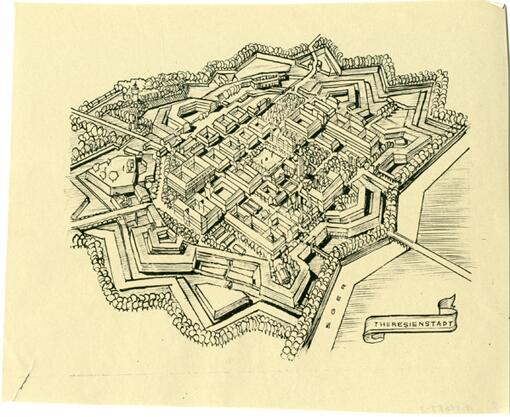
November 25, 1941 - Nazis seize Terezin to use as ghetto

I follow the twitter feed for Real Time WWII, and this is today's post: Nazi occupiers of Czechoslovakia have taken over walled fortress of Terezín to use as a ghetto & concentration camp.

Embedded image permalink

Sunday, November 17, 2013

Nazi looting of Jews

The Banality of Robbing the Jews

I just saw this article on the New York Times website - about what happened when the Nazis deported Jews from western Europe to the death camps. Their apartments were completely emptied and their property was stolen for the benefit of German soldiers, German families, and to satisfy the avarice of top Nazi officials.
The recent discovery of more than 1,400 prized paintings in the Munich residence of Cornelius Gurlitt, an art collector whose father collaborated with the Nazis, has brought the pillage of the Jews back into the limelight. Yet the bulk of anti-Semitic looting during World War II was at once much more banal and more widespread. 
In Paris, the plunder of Jewish possessions began with the arrival of German troops in June 1940. At first, it applied only to art collections. But as soon as the Final Solution was devised in January 1942, the confiscations spread to the entire Jewish population, most of which comprised poor immigrants from Eastern Europe. Stripping Jews of their belongings was part and parcel of the effort to destroy them; pillage was an essential tool of extermination.

Wednesday, October 23, 2013

Kafranbel: The Syrian Revolution in 3 minutes


So now the UN is destroying the Assad regime's chemical weapons - but what about all the rest of them? We stand by with our hands folded and do nothing. This is a video from the rebel village of Kafranbel that covers the Syrian revolution in three minutes.

For more explanation see this CNN story: In Northern Syria, rebels use satire as a weapon.

And for more on Kafranbel, see their Facebook page, Kafranbel Syrian Revolution.

Monday, October 14, 2013

Western Wall in 1898, as painted by Henry Ossawa Tanner

Henry Ossawa Tanner, "The Wailing Wall", ca. 1898
Henry Ossawa Tanner (1859-1937) was an African American artist (born in Pittsburgh), who spent most of his artistic career in Paris, where he was freed of the anti-Black racism of the United States and was able to pursue his art without constantly being insulted and mistreated. He studied with the painter Thomas Eakins at the Pennsylvania Academy of the Fine Arts from 1879-1885, and then in 1891 he went to Paris and spent the rest of his life there.
He visited Palestine twice in 1897 (for six weeks) and in 1898 (for six months). As a result of his visit, in addition to many other biblical scenes, he painted Jews praying at the Western Wall, both men and women. Notice that there's no mehitza (screen to divide men and women at prayer), and that there is a row of women standing right in front of the Kotel, all wearing colorful scarves.
In "Mutual Reflections: Jews and Blacks in American Art," Milly Heyd writes that Tanner
depicted the  site as symbolizing the destruction and hoped for revival of the old Temple, an image that became a visual icon for a specific national struggle, constantly repeated by artists in the nineteenth and twentieth centuries. Tanner painted the wall and worshipers with great empathy and an emphasis on the group as well as on the individual: "Nor do I forget the deep pathos of 'Jews' Wailing Place' - those tremendous foundation stones of that glorious temple that stood upon Mount Moriah, worn smooth by the loving touch of tearful and devout worshippers from all over the world, under the scornful gaze of the to-day Turkish conqueror."
This painting is on display at the Rhode Island School of Design Museum.


Sunday, October 06, 2013

Some good news from the world of Hebrew manuscripts. The National Library of Israel in Jerusalem is digitizing and will be posting online 1600 manuscripts from the Palatina Library in Parma, Italy.
JERUSALEM (AP) — Israel's National Library says it has signed an agreement with a leading Italian collection to display online some of the world's most important Hebrew manuscripts, making them accessible to the public for the first time. 
National Library Judaica curator Aviad Stollman says it will be digitizing the Palatina Library's collection of about 1,600 documents dating to the Middle Ages. He says the collection includes rare illuminated manuscripts and one of the oldest existing copies of the Mishna, a central Jewish text. 
Stollman said Thursday the manuscripts are on par with Vatican and Oxford collections. He says Israel's library is also negotiating with those institutions to scan their manuscripts 
Stollman said Israel's National Library is seeking to digitize and post online all of the world's Hebrew manuscripts.
Folio from a 13th century Hebrew Bible written in Toledo, Spain.

Are these people crazy???

Speaker of the House Boehner said today that the U.S. Is On A Path To Default, unless President Obama gives in to the Republicans. He said that he wants a "serious conversation about dealing with problems that are driving the debt up. It would be irresponsible of me to do this." If a conversation is all he wants, why doesn't he just make a phone call? You don't threaten to tear down the house if all you want is a conversation.

Is he serious? It is supremely irresponsible for him to threaten not to raise the debt limit, since not raising it would lead to an economic catastrophe. Doesn't he remember the financial meltdown of 5 years ago? I was just thinking about that the other day. On September 14, 2008, Lehman Brothers was not saved by the Federal Reserve and filed for bankruptcy. Bank of America bought Merrill Lynch. AIG was in big trouble, and eventually was saved by the Fed. On September 15, The Dow Jones fell 504 points. On September 28, 2008, the House of Representatives voted no on the plan to bailout the financial industry, and the stock market plunged over 700 points. I remember staring at the graphic of the falling stock market on the Times website in the middle of the afternoon and having the feeling that no one was in charge.

Is this what Boehner really wants? If he has any concern about the financial state of the United States and its standing in the world, he would not be making these threats and he certainly would not carry them out. I had thought that one stable point in the American political system was that the Republicans were the party of business, especially big business. I suppose I should have been disabused of that notion in the fall of 2008 when Republicans opposed bailing out the auto companies. But this is even crazier.

The Wall Street Journal reports:
If U.S. lawmakers fail to raise the federal government’s borrowing limit this month they will cause a “very, very severe recession with no obvious way out,” Moody’s Analytics Chief Economist Mark Zandi said Friday.

With the government unable to enact fiscal policies and the interest rates set by the Federal Reserve already near zero, “there would be no policy levers” to use against the resulting recession, Mr. Zandi said in a conference call with clients.

Mr. Zandi’s comment’s echo recent warnings from Wall Street titans like Goldman Sachs Group Inc. Chief Executive Lloyd Blankfein and from the White House.

The U.S. Treasury has said it will run out of room to maneuver to remain below the $16.7 trillion debt limit “no later” than Oct. 17 unless Congress raises it. That deadline is fast approaching, even as the government entered its fourth day of shutdown because of deep-seated disagreements among lawmakers over spending.

If the debt ceiling isn’t raised, Treasury will have to match its ongoing expenditures to its revenue on a day-by-day basis. Since the government spends more than it takes in, the inability to borrow money will take billions of dollars out of the economy that it injects through daily operations and spending. The situation could also eventually lead to a government default if the Treasury is unable to make payments to its creditors.

Even if the U.S. Treasury were to prioritize debt repayment over outlays for Social Security, Medicare and other payments, investors would grow increasingly nervous about their holdings of government debt securities. “The real unknown is how financial markets will react,” Mr. Zandi said.

Against this backdrop, Mr. Zandi expects to investors to start applying increasing pressure on lawmakers in Washington to resolve the twin fiscal crises. He noted the stock market this week has been “softening,” while the cost of insuring U.S. Treasuries against default has been rising. “If this drags into next week the sell-off will start to intensify,” he said.
In other words, if the government defaults on its debt, what happened in fall of 2008 will seem like a walk in the park.