Sunday, November 27, 2005

MEMRI: Latest News

According to this November 23, 2005 report by MEMRI: Latest News, a delegation from the Presbyterian Church USA met with Hezbullah's commander in southern Lebanon.
On October 20, 2005, the Lebanese press reported that a delegation from the Presbyterian Church USA, headed by Father Nihad Tu'meh and with Robert Worley as its spokesman, visited southern Lebanon at the invitation of Hizbullah, and met there with the terrorist organization's commander in southern Lebanon, Nabil Qawuq.

During the meeting, Qawuq expressed his doubts about U.S. actions in the region and the intentions of the Bush administration. Worley, on his part, assured Qawuq that he was not defending the U.S. administration, that all delegation members had voted Democratic, and that the Presbyterian Church had been pressured by U.S. Jewish organizations because of its campaign to divest from corporations working with Israel.
A separate delegation of families of 9/11 victims met with the Deputy Head of Hizbullah, Sheik Naim Qassem. A report was aired on this meeting on November 11, 2005.
Anchor: Sheik Naim Qassem met with an American delegation which included family members of victims of the 9/11 bombings in New York City. The delegation members said that the purpose of the visit was to spread peace and to establish ties with various forces in different regions of the world, in order to stress the united stand against terrorism and aggression.

Sheik Qassem recalled Hizbullah’s communiqués condemning the New York attacks and the recent bombings in Jordan. He emphasized that state-sponsored terrorism and the terrorism of some groups throughout the world should be condemned because it goes against humanity, regardless of religion, language or geography.

I find it utterly amazing that anyone from a family that had lost a loved one on 9/11 would want to meet with the leader of an Islamist terrorist group. It is a shame that this report has not been more widely disseminated, and the names of those who met with the Hizbullah leader revealed.


In the beginning was Al-Aqsa

An interesting new book on the contemporary Muslim denial of the history of the Temple in Jerusalem, reviewed in Haaretz.
The historian Dr. Yitzhak Reiter, who is now publishing a book entitled "From Jerusalem to Mecca and Back - the Muslim Rallying Around Jerusalem," has been collating for years thousands of publications, religious legal rulings, statements and pronouncements of Muslim clergymen, historians, public figures and statesmen on the subject of Jerusalem. His book draws in great detail a portrait of the great Muslim denial, a denial of the Jewish connection to Jerusalem, the Temple Mount and to the Temple. This argument has strengthened in intensity since the Six-Day War.

Saturday, November 26, 2005

How much genocide is too much?

Nicholas Kristoff has another column (from today's New York Times) on how the genocide is getting worse in Darfur. He points out that the Congress has cut out all funding for the 7,000 African Union peacekeepers (who are already too few really to do much to stop the genocide). Even though we decry this genocide, and call it what it is, we are not stopping it.

Since this column is behind the Times' subscriber firewall, I'm including the whole text.

NYALA, Sudan

Who would have thought that a genocide could become worse? But after two years of heartbreaking slaughter, rape and mayhem, the situation in Darfur is now spiraling downward. More villages are again being attacked and burned - over the last week thatch-roof huts have been burning near the town of Gereida and far to the northwest near Jebel Mun.

Aid workers have been stripped, beaten and robbed. A few more attacks on aid workers, and agencies may pull out - leaving the hapless people of Darfur with no buffer between themselves and the butchers. The international community has delegated security to the African Union, but its 7,000 troops can't even defend themselves, let alone protect civilians. One group of 18 peacekeepers was kidnapped last month, and then 20 soldiers sent to rescue them were kidnapped as well; four other soldiers and two contractors were killed in a separate incident.

What will happen if the situation continues to deteriorate sharply and aid groups pull out? The U.N. has estimated that the death toll could then rise to 100,000 a month. The turmoil has also infected neighboring Chad, which is inhabited by some of the same tribes as Sudan. Diplomats and U.N. officials are increasingly worried that Chad could tumble back into its own horrific civil war as well.

This downward spiral has happened because for more than two years, the international community has treated this as a tolerable genocide. In my next column, my last from Darfur, I'll outline the steps we need to take. But the essential starting point is outrage: a recognition that countering genocide must be a global priority.

It's true that a few hundred thousand deaths in Darfur - a good guess of the toll so far - might not amount to much in a world where two million a year die of malaria. But there is something special about genocide. When humans deliberately wipe out others because of their tribe or skin color, when babies succumb not to diarrhea but to bayonets and bonfires, that is not just one more tragedy. It is a monstrosity that demands a response from other humans. We demean our own humanity, and that of the victims, when we avert our eyes.

Already, large swaths of Darfur are so unsafe that they are "no go" areas for humanitarian organizations - meaning that we don't know what horrors are occurring in those areas. But we have some clues. There are widespread reports that the janjaweed, the government-backed Arab marauders who have been slaughtering members of several African tribes, sometimes find it convenient not to kill or expel every last African but to leave a few alive to grow vegetables and run markets. So they let some live in exchange for protection money or slave labor.

One Western aid worker in Darfur told me that she had visited an area controlled by janjaweed. In public, everyone insisted - meekly and fearfully - that everything was fine. Then she spoke privately to two sisters, both of the Fur tribe. They said that the local Fur were being enslaved by the janjaweed, forced to work in the fields and even to pay protection money every month just to be allowed to live. The two sisters said that they were forced to cook for the janjaweed troops and to accept being raped by them.

Finally, they said, their terrified father had summoned the courage to beg the janjaweed commander to let his daughters go. That's when the commander beheaded the father in front of his daughters. "They told me they just wanted to die," the aid worker remembered in frustration. "They're living like slaves, in complete and utter fear. And we can't do anything about it." That aid worker has found her own voice, by starting a blog called "Sleepless in Sudan" in which she describes what she sees around her. It sears at Sleepless in Sudan, without the self-censorship that aid groups routinely accept as the price for being permitted to save lives in Darfur.

Our leaders still haven't found their voices, though. Congress has even facilitated the genocide by lately cutting all funds for the African Union peacekeepers in Darfur; we urgently need to persuade Congress to restore that money. So what will it take? Will President Bush and other leaders discover some backbone if the killing spreads to Chad and the death toll reaches 500,000? One million? God forbid, two million? How much genocide is too much?

Sunday, November 13, 2005

The World Without Zionism

If you've ever wondered what happened to good old Stalinist rhetoric, take a look at the Iranian website, The World Without Zionism. This particular page denounces the "Zionist octopus."

And lest you think that anti-Zionist does not equal anti-Semitism, see this page on the site: Jewish Conspiracy. The source for this particular screed? "Jewish Conspiracy: The Protocols of the Learned Elders of Zion”

My guess is that this is intended to be an official website to accompany the recent Iranian "conference."

Saudi Arabia ends boycott of Israel

The Washington Times is running an article that says that Saudi Arabia has agreed to end all economic boycotts of Israel as a condition of entering the World Trade Organization. It will be entering the WTO next month.

Business Week also confirms that Saudi Arabia will be abandoning the Arab boycott of Israel:
The World Trade Organization on Friday approved Saudi Arabia's bid to become the 149th member of the global body, winding up a 12-year negotiating process slowed by the country's participation in the Arab League boycott of Israel.

The acceptance by all WTO members is necessary before a new member can be admitted, and Saudi Arabia made a number of agreements with different countries on opening up its markets.

Itzhak Levanon, Israel's ambassador to the WTO, said Saudi Arabia had provided sufficient guarantees in its accession process that it would follow the WTO's rules, which include "not having a boycott against anyone else inside the organization."

"Such types of boycotts within the WTO are totally unacceptable," Levanon told The Associated Press. "As soon as Saudi Arabia accepted all these rules, the door has been open for future relations when the moment is ready for that."

But Prince Abdulaziz, Saudi Arabia's assistant minister for petroleum affairs, was less clear: "They are a member and we are a member. We are just there as members of the WTO. Nothing more."
So which is it? Are Abdulaziz's comments just for internal consumption?

Eye of the Storm

A scary article on Iran by Amir Taheri in the Jerusalem Post of November 10, 2005. Some important points:
When Iran's President Mahmoud Ahmadinejad made his "wipe Israel off the map" remarks last month, many diplomats on both sides of the Atlantic rushed to explain, read between the lines and relativize what was an unambiguous statement of Teheran's long-established policy. They expressed the hope that Iran would "clarify" - meaning soften - its position....

Last week, however, Iran's "Supreme Guide" Ali Khamenehi, the nation's ultimate decision-maker under the Khomeinist Constitution, not only gave his ringing endorsement to Ahmadinejad's remarks, but went further by offering his "vision for Palestine." Addressing a congregation at the end of Ramadan, Khamenehi said Iran rejected the two-states formula proposed by the US, and would fight for the creation of a single state encompassing Israel and the Palestinian territories. In such a state, power would be in the hands of Muslims, although some Jews would be allowed to remain, under unspecified conditions. Khamenehi went further by suggesting that Israel's political and military leaders, especially Prime Minister Ariel Sharon, be tried on charges of crimes against humanity.

....Iran, on the other hand, has become more powerful. Internally, the soft-liners have been kicked out, allowing a new generation of radical revolutionaries to seize control of all levers of state power. Iran's oil income is at an all-time high, allowing the new president to buy popular support.

....Iran has also emerged as the main supporter of Palestinian radical movements, some of which had been without a patron since the fall of Saddam Hussein. Next February, Teheran is scheduled to host the largest gathering of radical leaders from across the Muslim world to endorse its one-state formula for ending the Israel-Palestine conflict.

....The state-owned media in Teheran are in combative gear. Echoing Ahmadinejad's analysis, the Iranian media present the West, led by the US, as a "sunset" (ofuli) power that must be taken on and defeated by a tolue'e (sunrise) Islamic power led by Iran. In that context the destruction of Israel becomes a key element in Teheran's strategy in the Middle East because Ahmadinejad knows that radical Sunni Arabs will not accept the leadership of Shi'ite Iran unless it is perceived as the only power capable of realizing their dream of wiping Israel off the map.
But it's clear that the Iranian regime is not only anti-Israel, but also antisemitic. In other words, its animus is directed not only at the state of Israel, but at the Jewish people in general. Memri reported in January about antisemitism and Holocaust denial in the Iranian media.

Some excerpts:
In an op-ed titled 'Lies of the Holocaust Industry,' published by the Iranian Foreign Ministry-affiliated Tehran Times, columnist Hossein Amiri claims that the Holocaust never took place, basing his beliefs on "revisionist historians" who have "proven" that the eradication of the Jews would have taken more than the six years of the war and that "ethnic cleansing through the use of the poison gas Zyklon-B, as the Zionists claim, was not possible at the time." ...

In an interview with MEHR [the official Iranian news agency], Dr. Fredrick Toben of the Adelaide Institute in Australia discussed U.S. policy towards Iran and the nuclear issue, and said that " the state of Israel is founded on the 'Holocaust' lie" and that "exposing this lie" will help "dismantle the Zionist entity."...

French Holocaust denier Professor Robert Faurisson, a former lecturer at Lyon University, was interviewed by MEHR. The following are excerpts:
Faurisson: "In France, Jewish power is even stronger than in the USA. In France it is our lobby number 1. Nobody dares to speak out against those people because of their alleged 'Holocaust'…"

MEHR: "… Actually, France doesn't respect the rights of its citizens, as it has banned the hijab (Islamic headscarf) in public schools. How do you assess that?"

Faurisson: "Because Jews, in a certain way, are used to treating the French as they treat Palestinians. The difference is that Palestinians refuse to obey the Jews, whereas the French obey the Jews, once more because of the Big Lie of the alleged 'Holocaust,' in which unfortunately they seem to believe.

"The alleged 'Holocaust' of the Jews is the sword and the shield of the Jewish tyranny all over the world. Destroy it."
Antisemitic statements were made by Iranian university professor Heshmatollah Qanbari in an interview on Iran's Channel 1 TV, in which he surveyed the "evil nature" of the Jews throughout history, basing his beliefs on "historical truth" according to the Koran, under the guise of a scientific analysis. Qanbari claimed that Jews throughout history were a "subversive element" in human society and an "anti-human movement," which is "dangerous to both Christians and Muslims," and monotheism in general. The Jews, according to Qanbari, are the source of "all corrupt traits in humanity," and throughout history they have exhibited expansionist tendencies, coveting and usurping other nations. Global domination is also one of their aims, according to Qanbari, who says that most of Europe is under Jewish control today. Qanbari also warned that the Zionists' "racist" and "satanic ideology may take over the world." ....

Currently being broadcast on the Iranian Sahar TV channel is the antisemitic drama series 'Al-Shatat,' which was originally aired on Hizbullah's Al-Manar TV station. 'Al-Shatat's' blatantly antisemitic features were the main cause for the banning of Al-Manar TV in France. The current rerun is a slightly modified version, in which some of the more gruesome features in the original were cut. The series still propagates the view that the Jews have sought to control the world for many centuries via a secret global Jewish government. According to the series plotline, this secret government has been led, since the 19th century, by the Rothschild family....
It's no surprise that the Iranian President and Supreme Ayatollah came out with their statements calling for the destruction of Israel - it is completely compatible with these official expressions of antisemitism in the Iranian media.

Wednesday, November 09, 2005

'We'll definitely win,' French teen says

A reporter from Ha'aretz went to speak to some of the rioting French youths. He says, first of all, "There is something odd about the events that have been occuring in France since October 27, especially if your only source of information is media reports: The French government is dispatching helicopters and elite units, thousands of police officers, imposing curfews and even contemplating deploying the army - against wild kids aged 13 or 14 who, because they have nothing to do at night, are torching cars."

The two boys he spoke to (apparently in their late teens) have completely failed to find work (even with much trying) after leaving school.
Both have been unemployed since leaving school, not for lack of trying. They send off their resume, go to interviews, are perennially rejected. The main reason they can't find work, they believe, is their address - nobody wants to hire youths from 93 (the administrative code for their province) - but also their ethnic origin. Mohammed has a white friend from the projects who also dropped out of school and came with him to a job interview: The friend was hired.

Their complaint is not abstract: The nearest employment center is far away, and they want a local one in Villepeinte.

What does Mohammed mean when he says they will win in the end? "To win is work and respect," he says.

It certainly sounds from stories like these that people who interpret the riots as being plotted by Islamists are wrong. These are young men who don't want to be separate from French society - they want work and respect.

Tuesday, November 08, 2005

Darfur - Consider the horrors of peace

Another good column by Christopher Hitchens on Realism in Darfur - Consider the horrors of peace.

As he says: "What was all that garbage about 'never again'? What was the meaning of Clinton's apology to the Rwandans? What did Colin Powell mean when he finally used the word 'genocide' to describe the events in Darfur, just before resigning as secretary of state and becoming an advocate for more realism all round?"

He conducts a thought experiment on Rwanda:
Any critique of realism has to begin with a sober assessment of the horrors of peace. Everybody now wishes, or at least says they wish, that we had not made ourselves complicit spectators in Rwanda. But what if it had been decided to take action? Only one member state of the U.N. Security Council would have had the capacity to act with speed to deploy pre-emptive force (and that would have been very necessary, given the weight of the French state, and the French veto, on the side of the genocidaires). It is a certainty that at some stage, American troops would have had to open fire on the "Hutu Power" mobs and militias, actually killing people and very probably getting killed in return. Body bags would have been involved. It is not an absolute certainty that all detained members of those militias would have been treated with unfailing tenderness. It is probable that some of the military contractors would have overcharged, and that some locals would have engaged in profiteering and even in tribal politics. It is impossible that any child of any member of the Clinton administration would have been an enlisted soldier. But we never had to suffer any of these wrenching experiences, so that we can continue to wish, in some parallel Utopian universe, that we had done something instead of nothing.

Or not exactly nothing. The United States ended up supporting the French military intervention in Rwanda, which was mounted in an attempt not to remove the genocidaires but to save them. Nonintervention does not mean that nothing happens. It means that something else happens. Our policy in Darfur has not just failed to rescue a stricken black African population: It has actually assisted the Sudanese Islamists in completing their policy of racist murder. Thank heaven that we are tough enough to bear the shame of this, and strong enough to forgive ourselves.

Does anyone think that this would not have been the reality in Rwanda? We might have saved hundreds of thousands of lives, but still had people complaining because we didn't go through the UN or listen to the French (who have their own problems now).

Adloyada: Paris is burning

An interesting perspective on the riots in France - Adloyada: Paris is burning. The author suggests that the riots are "the ultimate outcome of years of a statist system which has preserved a higher level of social protection and security for its own, whilst permanently marginalizing the children and grandchildren of the immigrants who were imported to do the work nobody wanted." She also tells a very interesting story about living in France as a teenager in 1960 and encountering young Algerian men:
I found I constantly got picked up by young Algerian men. It eventually penetrated my consciousness that the reason they made such a beeline for me was that no French girl would so much as look at them, and they were desperate for some sort of social and preferably sexual outlet.

I did begin spontaneously to think about what led to this state of affairs. Previously I would have thought of it as the product of something we in those days called prejudice. But I worked out for myself that it was more than that. There was clearly a system of importing the poor and desperate of actual or former colonies as cheap labour, and that the system would discard this labour as soon as it had served its purpose. It was my first serious independent accomplishment in political and sociological analysis, though it would be another twenty eight years before I got round to acquiring any formal qualifications in either subject.

The impact was powerful enough to have influenced my thinking till this day. The current riots,although they involve Muslims, seem to me to have much more in common with the riots and slogans of the black consciousness movement of the seventies. That manifested itself in Britain over incidents to do with alleged police brutality, or the failure of the police to solve murders or other serious crimes against black people.

I must say that whatever the ultimate reason for the riots, I have been quite astonished at the ineffectiveness of the police and government response in France. Only now are the police being given the power to impose curfews.

And one of Adloyada's commenters makes a point that I have also wondered about:
The Paris riots have this in common with the UK riots. I've not seen one interview with a decent ordinary person who has had his car torched, or with someone running a marginal, probably uninsurable business, now wrecked.

The media report either the clash of civilisations or the romantic rebel harbingers of revolution.

Sunday, November 06, 2005

Rage of French Youth Is a Fight for Recognition

This article argues that Rage of French Youth Is a Fight for Recognition - it's a protest against having no future, rather than being a religious statement.
Abdel, echoing the anger of many of the youths, said he resented the French government's efforts to thrust Muslim leaders into the role of mediators between the police and the violent demonstrators.

"This has nothing to do with religion," he said. "But non-Muslims are afraid of people like me with a beard. I look suspicious to them. Discrimination is all around us. We live it every day. It's become a habit. It's in the air."

He continued: "I grew up in France, yet I speak of God and religion. I have a double culture. I belong to both. We should stop the labeling."

Rezzoug, the caretaker, said he has seen local youths struggle with deep personal conflicts caused by their dual cultures. "They go to the mosque and pray," he said. "But this is France, so they also drink and party."


Some French opinions: (as reported by the Washington Post's blog:

"A country which prides itself as the fatherland of the humans right and the sanctuary of a generous social model shows, in the eyes of all, that it is incapable of ensuring dignified living conditions for young French people," said the editors of Le Monde (in French).

"Nothing has deterred the gangs from running rampage. Not calls for calm, not marches for peace. Not even thousands of extra police," says the English-language Euronews

The explosion of violence has split both the public and the political classes.

The comment of hardline Interior Minister Nicholas Sarkozy that the rioters were "scum" prompted to Socialist Party leader Francois Hollande to tell Liberation, a left-wing daily, that [he] had "zero tolerance" for Sarkozy and his "simplistic polemics."


Looking at the photographs available on the Washington Post website, it is amazing to me that no one has yet been killed in the rioting.

Riots in France

It is very frightening to see the riots spread across France, and to realize that the police aren't being effective in stopping it. This article, As Riots Continue in France, Chirac Vows to Restore Order, points out that the rioting has spread to the center of Paris, including the Marais, the old Jewish quarter.

While the violence remains primarily constrained to uncoordinated attacks on property, Sunday's escalation raised fears that it could evolve into something deadly. It seemed only luck that by Sunday night, no one had been killed.

A gaping hole exposed a charred wooden staircase of a smoke-blackened building in Paris's historic Marais district Sunday, where a car was set on fire the previous night. Florent Besnard, 24, said he and a friend had just turned into quiet Rue Dupuis when they were passed by two running youths. Within seconds, a car further up the street was engulfed in flames, its windows popping and tires exploding as the fire spread to the building and surrounding vehicles.

"I think it's going to continue," said Mr. Besnard, who is unemployed.

The attack angered people in the neighborhood, which includes Paris's old Jewish quarter and is still a center of Jewish life in the city. "We escaped from Romania with nothing and came here and worked our fingers to the bone and never asked for anything, never complained," said Liliane Zump, a woman in her seventies, shaking with fury on the street outside the scarred building.


It's unclear to me from the coverage if the riots are merely caused by pent-up frustration of unemployed young people angry at the police because of unfair treatment, or whether there is more to it - religious or racial antagonism, or Islamist agitation. The riots originated in the suburban slums where Muslim Arab and African immigrants live. The article also says that even before these riots, about 20,000 cars had already been burned up in France. When is this going to end?

Friday, November 04, 2005

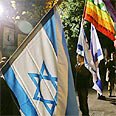
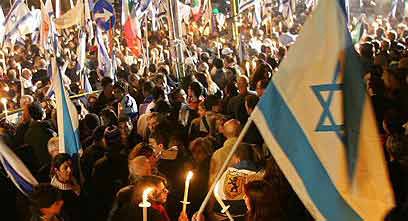
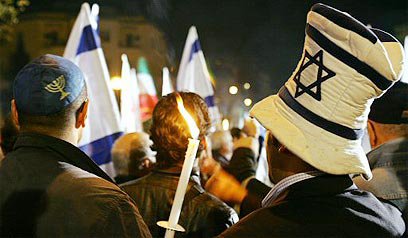
Italians rally for Israel

A very satisfying European response to the Iranian President's words - Italians rally for Israel, with some very nice photos from the rally.


Sunday, October 30, 2005

Iran's Useful Reminder

Jim Hoagland at the Washington Post points out how President Ahmadinejad's anti-Israel statements serve as a Useful Reminder of the true nature of the Iranian regime and indeed of what the U.S. is fighting in the Middle East. He says:
Most Valuable Politician of the year? How about President Mahmoud Ahmadinejad of Iran, who has surged ahead for the 2005 MVP award in the few months he has been in office? He reminds a distracted world at crucial moments of the true nature of Iran's regime, of the abiding source of conflict in the Middle East and of the deeper meaning of global terrorism.

Racial and religious hatreds are at the core of these phenomena - and at the heart of Ahmadinejad's pledges to see Israel "wiped off the map" and to ensure that Arabs who recognize the Jewish state "burn in the fire of the Islamic nation's fury." His statements were reported in laudatory terms by Iranian state-run television Wednesday.

For Hoagland, the new thing is that the Europeans have denounced the statements of Ahmadinejad:
Even though the Persian chauvinists who took power in Tehran in 1979 have been more discreet in public in recent years, it is not news that they hate both Jews and Arabs - or that the sentiment is returned. If novelty there was, it lay in statements of condemnation that European governments issued as the inflammatory remarks spread around the globe.

Britain, France and Germany raced to distance themselves from Ahmadinejad's double-barreled anti-Semitic blast. They have been negotiating with his regime in hopes of rehabilitating it. A spiteful and belligerent speech the Iranian leader gave at the United Nations in mid-September had already signaled the enormousness of their task. But they persisted. Now even Russian Foreign Minister Sergei Lavrov, perhaps the coldest and most uncaring fish in international diplomacy, feels compelled to mutter that the Iranian firebrand's statements were "unacceptable."

He then turns to an example of hope in the Middle East - Iraqi Kurdistan.
The fates of Nazi Germany and Vichy France are not the only lessons available to Iranians - or for that matter to Israelis or Americans - of the bitter fruits of preaching and practicing racial hatred. In neighboring Iraq, a regime that committed genocide against the Kurdish tribesmen of the north and persecuted Shiite Arabs in the south lies in ruins and seems incapable of rising again.

Because Saddam Hussein would not leave them in the peace and isolation of their mountain redoubt, Iraq's Kurds went to war against Baghdad three decades ago. They deliberately set in motion the chain of events that were to bring an American invasion force to Baghdad to overthrow the dictator in 2003. While he could not foresee exactly how it would happen, the late Kurdish leader Mullah Mustafa Barzani told me in 1972 that it would. I was skeptical; he was right.

No political outcome can balance the scales of personal grief and loss brought by the loss of 2,000 and more American service personnel in Iraq since the invasion began. Human lives cannot be measured and counted as instruments or integers of policy or politics.

So the fact that Kurds live in freedom today from racial pogroms directed at them from Baghdad -- in large part because of U.S. protection and sacrifice -- can assuage no mother's grief or friend's anger over U.S. casualties. But neither can the positive change that American actions have brought simply be dismissed or ignored.

Barzani's son, Massoud, visited the White House last week to thank the American nation, through President Bush, for those sacrifices and to reiterate the Kurds' commitment to staying in a "federal" Iraq that institutionalizes their autonomy -- and survival. Federalism for the Kurds is not some legalistic ploy to maximize their share of oil reserves, or a thumb to stick in Arab eyes in revenge. It is a chance to live and to let live.

We shouldn't forget that we've actually accomplished something good in Iraq - allowing the Kurds to live freely, rather than at the mercy of Saddam Hussein.

Saturday, October 29, 2005

More on Iran

This editorial, Contrived Fury, in the Arab News (published in Saudi Arabia - referral from The Religious Policeman) is an interesting comment on the Iranian President's call to "wipe Israel off the map."

The editorial points out that "Four years ago, former President Hashemi Rafsanjani, regarded by the West as a moderate, called for the nuclear annihilation of Israel. The West did not blink an eye. Ever since the 1979 revolution, Iran has been consistently and vehemently anti-Israel. The rest of the world has known it and lived with it. It lived with the knowledge because it also knew that Iran was not in a position to wipe Israel off the map and that the words were mere rhetoric from those who wanted to give their people something other than their failures to think about. The rest of the world too has been happy to live with the knowledge that most Muslims and Arabs would prefer that Israel did not exist. But it does exist. It is a question of accepting reality."

As this editorial states, it is not as if the current Iranian President invented the Iranian threats against Israel. And it is interesting the evidence the editorial brings about Rafsanjani, who is the head of the "Expediency Council" in Iran. In a May 25, 2005 article about the upcoming Iranian elections (in which Ahmadinejad was elected), Neil Macfarquhar of the New York Times says, "Mr. Rafsanjani is a staunch supporter of Iran's developing its nuclear capacity for electric power, medical applications and other uses, but says he opposes nuclear weapons. That contrasts with a sermon at a Friday Prayer in 2001, however, in which he suggested that just one nuclear bomb could solve the problem of Israel's threatening the region with its own nuclear arsenal."

This New York Times article describes how western leaders seem to regard Rafsanjani -
Mr. Ahmadinejad's principal rival for power, Ali Akbar Hashemi Rafsanjani, a former Iranian president who was defeated by Mr. Ahmadinejad in the election, continues to hold considerable power as leader of the nation's Expediency Council, which was created in 1988 to help resolve contentious legislative issues. The Europeans have been negotiating with envoys loyal to Mr. Rafsanjani for the last two years and hope that they or others like them will re-emerge in the future.

Indeed in the last few weeks, Iran's ruling clerics, who still hold most of the power, have moved to strip the presidency of some of its authority over international diplomacy and hand it over to the Expediency Council under Mr. Rafsanjani. If there is any hope in the West for a diplomatic solution, it thus rests with this turn of events.

Now, since Rafsanjani essentially said the same thing as Ahmadinejad, then why should we be getting particularly upset at what Ahmadinejad just said - it doesn't represent a change in what the Iranian government would like to do. Perhaps the problem is simply, as the Arab News editorial says, that negotiations with the Iranian government over their nuclear weapons development have reached a critical point, and this statement points out once again how radical and dangerous the Iranian regime is.

A few years ago, in the late 1990's, when I had a postdoctoral fellowship at the Society of Fellows at Columbia University, Salman Rushdie came to speak. Rushdie still had to travel secretly and was protected by guards everywhere he went. We were invited to hear him speak by special letters and had to put our names on a list in order to be allowed into the hall where he was speaking. We also were not supposed to tell anyone that we were going to hear him speak, since his visit to New York was supposed to be a secret. When entering the hall, we had to show identification and our bags were searched. His talk was actually a conversation with Edward Said, then professor at Columbia. I also heard him the next day, when he came to the Society of Fellows to speak to graduate students. I knew that he was there because when I tried to enter the building, several NYPD officers were there as the security for Rushdie, and I had to prove that I had a legitimate reason to enter the building.

One thing I remember Rushdie saying - that the Iranian regime tried to present itself as reasonable to people in the West, that on the surface there were people in the regime who tried to present Iran as a regime like any other, but that we should not believe them - the regime was still as radical as under Ayatollah Khomeini. This is the same regime that (probably) ordered the bombings of the Israeli embassy and the Jewish community organization building in Argentina. If Iran is today restrained from trying to act out its threats to Israel, that does not mean that given the opportunity, the regime would not try to destroy Israel.

Thursday, October 27, 2005

Dateline Spandau

Imagine how Human Rights Watch, and other pundits, might have reacted to a trial of Hitler, ca. 1946 - Dateline Spandau, October 1946.

An excerpt from this exercise in alternative history: “Human rights groups have expressed concerns. A Human Rights Watch report says the Berlin trial ‘runs the risk of violating international standards for fair trials’. Amnesty International has sent three delegates to Berlin to ensure that Adolf Hitler receives a fair trial, and to oppose the death penalty if he is found guilty.”

Wednesday, October 26, 2005

Fomenting hatred against the Jewish people

And if my previous posts today have not sufficiently depressed you about the spread of anti-semitism today - take a look at this posting from Norman Geras, about anti-semitic videos shown in Iranian and Jordanian television, and also anti-semitic brochures distributed at the Frankfurt Book Fair (happening right now). They included the Protocols and an abridgement of the "International Jew" by Henry Ford. See this article on the Frankfurt Book Fair: The "Protocols of the Elders of Zion" at the Frankfurt Book Fair. I had been under the impression that it was illegal to disseminate such literature in Germany, so I'm kind of surprised that the police did not seize these books.

Suicide bombing in Israel

Earlier today, an Islamic Jihad terrorist killed 5 Israelis in a suicide bombing in Hadera. Three of the victims have already been identified: Michael Koifman, Sabicha Nissim and Pirchiya Machluf. 30 people were wounded in the attack.

Mirty's Place

A moving post at Mirty's Place on the difficulties of being a Jew. She says:
Other things come back too. I remember now why it is hard to be a Jew. Not because of the many customs and laws, but because of the pain. It’s hard to read about young Israelis gunned down alongside a road outside Jerusalem, to see the photos of their beautiful, shining faces. It’s hard to face the hatred that inflates our enemies. The news from Israel is so often bad. Beyond bad; heartbreaking. James Joyce wrote: “history is a nightmare from which I am trying to awaken.” But we know there is no escape. Our history is indeed a nightmare, a revelation of the darkest pits of human evil. It’s hard to carry that weight. It’s hard to watch my husband clean his plate at every meal, and wonder if he does that because his father was starved in Auschwitz. That is a lot of pain to carry. It is hard to be a Jew. It’s hard to care and feel so much.

I joked about the statement of the President of Iran in the previous post, but really, it's quite frightening to hear. I have good friends, whom I love dearly, living in Israel, and many relatives - and this man wants to wipe them all out! He's not seeking justice for the Palestinians - he's seeking mass murder.

It is a sobering return to reality after the splendid silliness of Simchat Torah services last night and today. I was one of the leyners for Bereshit (5th, 6th, and 7th days), and inbetween each day people in the congregation sang songs and acted out each day's creations. At the end, for the maftir reading (which outlines the sacrifices to be brought on the day, were the Temple still standing), we set up a grill & little stuffed rams were placed on it, next to some Triscuits (representing the grain offering). The two people who received Hatan Torah and Hatan Bereshit smiled with pleasure at the honor.

The other event I always mark on Simchat Torah is my mother's yahrzeit. She died on October 21 / Tishrei 23 in 1981 - 24 years ago. I was only 25 at the time, and it was devastating - and changed my life.

Our friends, the Iranians

As a post-holiday welcome to reality, Iran's President Says Israel Must Be 'Wiped Off the Map' - New York Times. He spoke at a "to an audience of about 4,000 student at a program called The World without Zionism, in preparation for an annual anti-Israel demonstration held on the last Friday of the holy month of Ramadan."

He continued by saying:
"The establishment of Zionist regime was a move by the world oppressor against the Islamic world," Mr. Ahmadinejad said, the news agency reported. "The skirmishes in the occupied land are part of the war of destiny. The outcome of hundreds of years of war will be defined in Palestinian land."

One wonders what is the identity of the "world oppressor" that he mentions....